No-future-disclosure policy
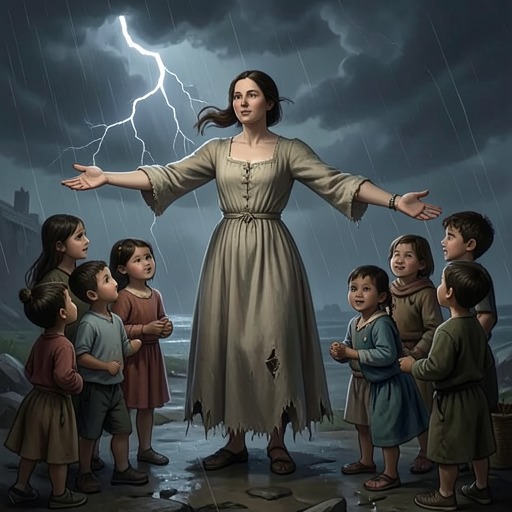
Miss Peregrine's Home of Peculiar ChildrenThe No-future-disclosure policy is Miss Peregrine’s prohibition on discussing the future with the children in her time loop. It makes her guardianship a matter of controlling not only their physical safety but also what they are encouraged to imagine: the children belong to a past from which Jacob Portman can speak, but they cannot enter the future he describes.
The Rule and Its Immediate Cause
Miss Peregrine frames the issue as a question of whether it is wise to discuss future events with children from the past. Her concern has a specific trigger: at dinner, Hugh gave an account of twenty-first-century telecommunications, explaining that letters could arrive almost instantaneously. Miss Peregrine invokes the episode sarcastically, turning the children’s new awareness of fast communication into evidence that Jacob’s presence has brought the future into their home.
The conversation also reveals a difference in how Miss Peregrine and Jacob understand the children. When Jacob questions whether she should call them children, she answers that they regard themselves that way too. She then returns to the practical matter of what they are told. The policy is not presented as a general argument about whether the children are mature; it is tied to their own understanding of themselves and to the consequences of giving them knowledge of a world they cannot reach.
Guardianship and the Island Home
Miss Peregrine connects the prohibition directly to her role as an ymbryne, whose sworn duty is to keep the children safe and, above all, keep them in the loop on the island. She states the policy as an obligation of guardianship, not merely a preference about manners or conversation. Jacob’s knowledge makes him a source of information that could undermine the sheltered life she is responsible for maintaining.
Her objection is that the future belongs to a world in which the children can never participate. After hearing about it, some ask for a jet-airplane trip to America, while others begin dreaming of owning a telephone-computer like Jacob’s. These examples give the rule its emotional and practical force: a passing account of modern technology can become a wish for travel or possession, even though the children have no prospect of fulfilling it.
Miss Peregrine calls the house the children’s home and says she has tried to make it as fine a place as she could. Her appeal does not erase the restriction; it explains the care with which she has built a life within it. The policy protects the fragile boundary between their island home and Jacob’s inaccessible world by discouraging desires that would make their confinement more keenly felt.
Limits, Friction, and Significance
Jacob accepts that he did not realize his remarks would cause a problem, but he asks why the children cannot leave. Miss Peregrine narrows her eyes and tells him she has underestimated the breadth of his ignorance, then begins scouring a saucepan with a steel brush. The answer is deferred rather than supplied in this exchange. That omission marks a limit to what Jacob understands about the children’s situation, while the saucepan and brush show Miss Peregrine turning back to domestic work instead of explaining further.
The policy therefore exposes a tension within the children’s protected life. Miss Peregrine has made their home as fine as she can, yet she insists that they cannot leave and asks Jacob not to make them want to. Her rule treats information as consequential: the future is not an innocent subject when hearing about it can produce hopes that the children’s circumstances deny. In a story organized around a time loop, the gap between Jacob’s future and the children’s past is not just a difference in dates; it governs what can responsibly be shared between them.